Cinematic Scoring for Audiobooks: Elite Author's Guide
What if your listeners didn't just hear your story, but felt the weight of every shadow and the pulse of every heartbeat? You've spent years crafting a world that lives and breathes on the page, yet standard narration often feels flat and one-dimensional. It is a common frustration for authors who value quality. This is where cinematic scoring for audiobooks changes everything. You want your audience to be captivated, not just occupied.
We will show you how to elevate a standard narration into a premium, film-like production that commands attention and earns five-star reviews. You might worry that music will distract from your words or feel overwhelmed by the complexities of licensing and original composition. We understand. This article demystifies the process of professional production and seamless distribution, ensuring your legacy is protected and your brand is elevated. From the initial arrangement to the final mix, you're about to discover how to turn your manuscript into an immersive sonic masterpiece that resonates with a global audience.
Key Takeaways
- Move beyond traditional narration by integrating a bespoke narrative layer of original music and sound design into your project.
- Discover why cinematic scoring for audiobooks is the new benchmark for creators who want to build a lasting legacy and maximize listener engagement.
- Identify the strategic differences in scoring fiction to drive character development versus using audio cues in non-fiction to maintain audience focus.
- Master the script marking process to define your sonic vision and pinpoint the specific musical beats that will elevate your manuscript.
- Secure your place on major platforms with a high-end, human-led production that avoids the pitfalls of automated or mechanical audio.
The Evolution of Audiobooks: Why Cinematic Scoring is the New Gold Standard
The era of the solitary, dry narration is coming to an end. Listeners no longer want to be read to; they want to be transported. As we look at The Evolution of Audiobooks, the trajectory is clear. We have moved from simple tape recordings to high-fidelity digital files, and now, we are entering the age of the immersive experience. In 2026, premium audiences demand production values that mirror the prestige of film and television. Cinematic scoring for audiobooks provides exactly that. It is a bespoke narrative layer of original music and sound design that transforms a standard recording into a world you can inhabit. It is the new gold standard for authors who refuse to let their work feel flat or monotonous.
The psychological impact of this approach is profound. Original compositions don't just set a mood; they anchor information. Music triggers the limbic system, the part of the brain responsible for emotion and long-term memory. When a listener hears a specific melody during a pivotal plot point or a key lesson, that information sticks. It is the difference between hearing a fact and feeling a truth. High-end production creates an emotional bridge between your words and your audience's heart.
The Difference Between Background Music and Cinematic Scoring
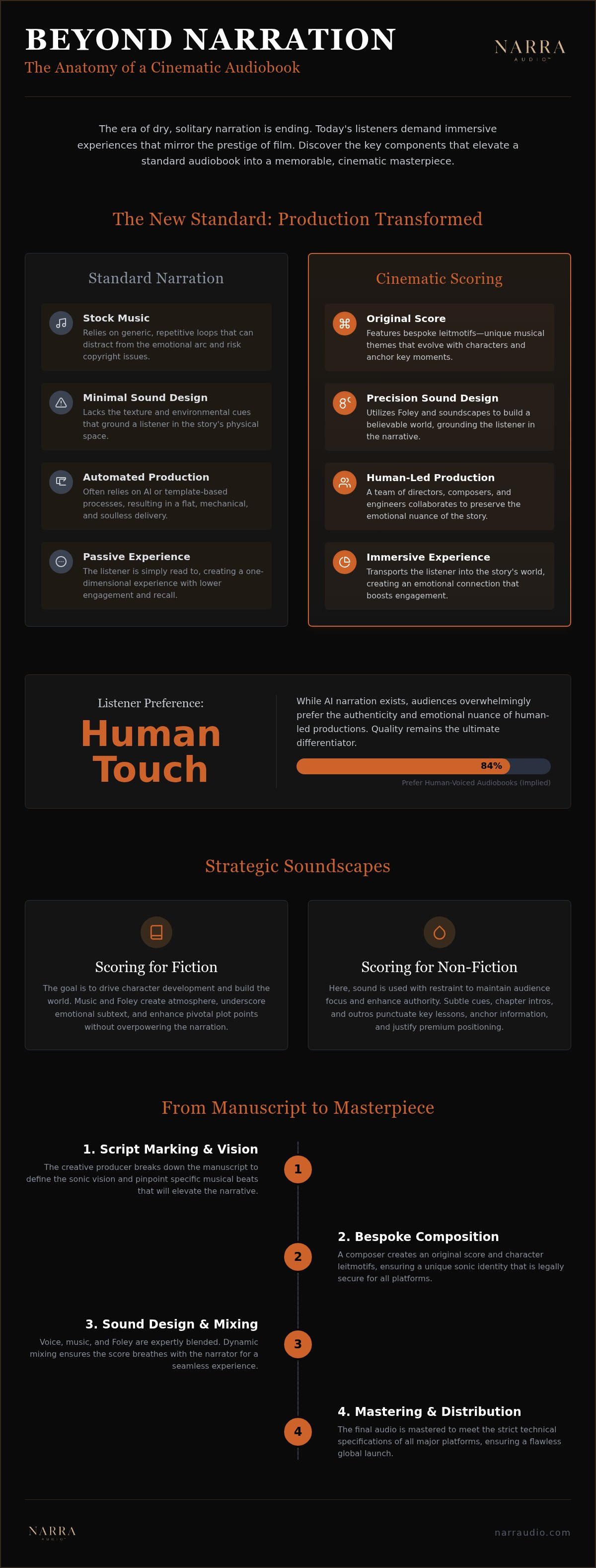
Standard background music relies on stock loops that repeat regardless of the narrator's emotional arc. It is static and often distracting. In contrast, cinematic scoring is fluid. It utilizes custom-composed leitmotifs; specific musical themes that evolve alongside your characters and themes. Dynamic mixing ensures the score breathes with the narrator, rising during moments of tension and receding for intimate reflections. Cinematic scoring is a narrative instrument that underscores the emotional subtext of the written word.
Why Authors are Choosing Immersive Sound Over Standard Audio
Quality is the ultimate differentiator. With the market flooded by low-quality, automated content, elite authors use high-end production to signal authority. Recent data indicates that while AI narration exists, only 16 percent of listeners have engaged with it as of June 2026. Listeners crave the human touch. Immersive soundscapes build a brand legacy that lasts. This isn't just for fiction authors. High-ticket courses and masterclasses use cinematic scoring for audiobooks to maintain focus, enhance authority, and justify premium pricing. It turns a simple audio file into a prestigious media asset.
The Anatomy of a Cinematic Audiobook Score
Constructing a premium audio experience requires more than just a microphone and a script. It requires an architectural approach to sound. To understand the future of this medium, we should look at The History of the Audiobook, which shows a steady climb from basic utility to high-art production. Today, the elite tier of cinematic scoring for audiobooks integrates three core pillars: original music, precision sound design, and the irreplaceable human element. While AI voice synthesis struggles with emotional nuance, professional human-led production ensures your story retains its soul. This is amplified by spatial audio and Dolby Atmos; technologies that place the listener in the center of a 360-degree sonic environment.
Original Music vs. Stock Libraries
Stock music is the enemy of a premium brand. It's generic, repetitive, and often carries the risk of copyright strikes on major distribution platforms. When you choose bespoke composition, you create a unique sonic identity. This leitmotif becomes a theme that listeners instantly associate with your work. It's a signature. If you want your project to stand out, investing in original music and cinematic scoring ensures your audio is as unique as your manuscript. A custom score adapts to your narrator's cadence, creating a seamless partnership between voice and melody.
Sound Design: Building the World Beyond the Words
Sound design and Foley provide the textures that words alone cannot convey. Foley is the art of recreating everyday sounds to ground the listener in the narrative's physical space. Imagine the subtle rustle of a letter being opened or the distant hum of a city street. In fiction, these cues build the world. In non-fiction, sound design is used more sparingly to punctuate key lessons and maintain listener focus without overwhelming the message. Finding this balance is critical. Foley acts as a narrative bridge that connects the listener's imagination to the physical reality of the story.
Strategic Soundscapes: Scoring for Non-Fiction vs. Fiction
Every genre demands a unique sonic architecture. A thriller requires a different emotional frequency than a business manifesto. While the technical tools of cinematic scoring for audiobooks remain consistent, the strategic application of sound must shift to serve the specific needs of the listener. In fiction, you are building a world; in non-fiction, you are building authority. Recognizing this distinction is what separates a standard audio product from an elite media asset. It is about knowing when to amplify the narrative and when to let the narrator's voice carry the full weight of the message.
Scoring for Fiction: Creating the Theater of the Mind
Fiction thrives on emotional immersion. To achieve this, we use leitmotifs; specific musical themes tied to characters or recurring narrative shifts. When a listener hears a low, cello-driven melody, they don't just hear music; they feel the presence of the antagonist before a single word is spoken. Atmospheric scoring also grounds the listener in the physical setting. A story set in the damp, heavy air of a London fog requires a different tonal palette than one set under the bright, percussive sun of Los Angeles. Research into Comparing Cinema and Audiobook Soundtracks suggests that these cues act as a cognitive map, helping the audience navigate complex plots and emotional climaxes without losing their place in the story.
Scoring for Non-Fiction and Thought Leaders
For non-fiction, the goal is clarity and retention. Music serves as a structural tool rather than a dramatic one. We use short, punchy musical transitions to signal the end of a chapter or the introduction of a key concept. This creates a "mental reset" for the listener, ensuring they stay engaged during long stretches of information. Atmospheric "beds" are used sparingly; subtle, low-frequency textures that enhance focus rather than distracting from the narrator's authority. This approach is particularly effective for authors producing high-ticket online courses or masterclasses, where cinematic scoring for audiobooks elevates the perceived value of the educational content and helps students retain vital lessons.
The memoir sits in a unique hybrid space. It requires the personal vulnerability of non-fiction paired with the cinematic polish of fiction. Here, the score must be deeply personal, often mirroring the author's own emotional journey. Regardless of the genre, the most powerful tool in a producer's arsenal is silence. Knowing when to pull the music back entirely allows the most pivotal moments of your manuscript to resonate with absolute clarity. It's a delicate balance. It's the difference between a book that is heard and a story that is experienced.
Orchestrating Your Project: A Guide to Cinematic Audio Planning
Creating a masterpiece isn't an accident. It is a deliberate, multi-stage process that begins long before the first microphone is live. To move from a silent manuscript to a high-end media asset, you must first define your sonic vision. This requires a partnership with a Master Producer who acts as the guardian of your intent. You aren't just adding background noise; you are building an architecture of sound. Effective cinematic scoring for audiobooks demands a blueprint that aligns your narrative's emotional arc with technical precision. It is the bridge between your private creative process and the public's immersive listening experience.
The Script Analysis Phase
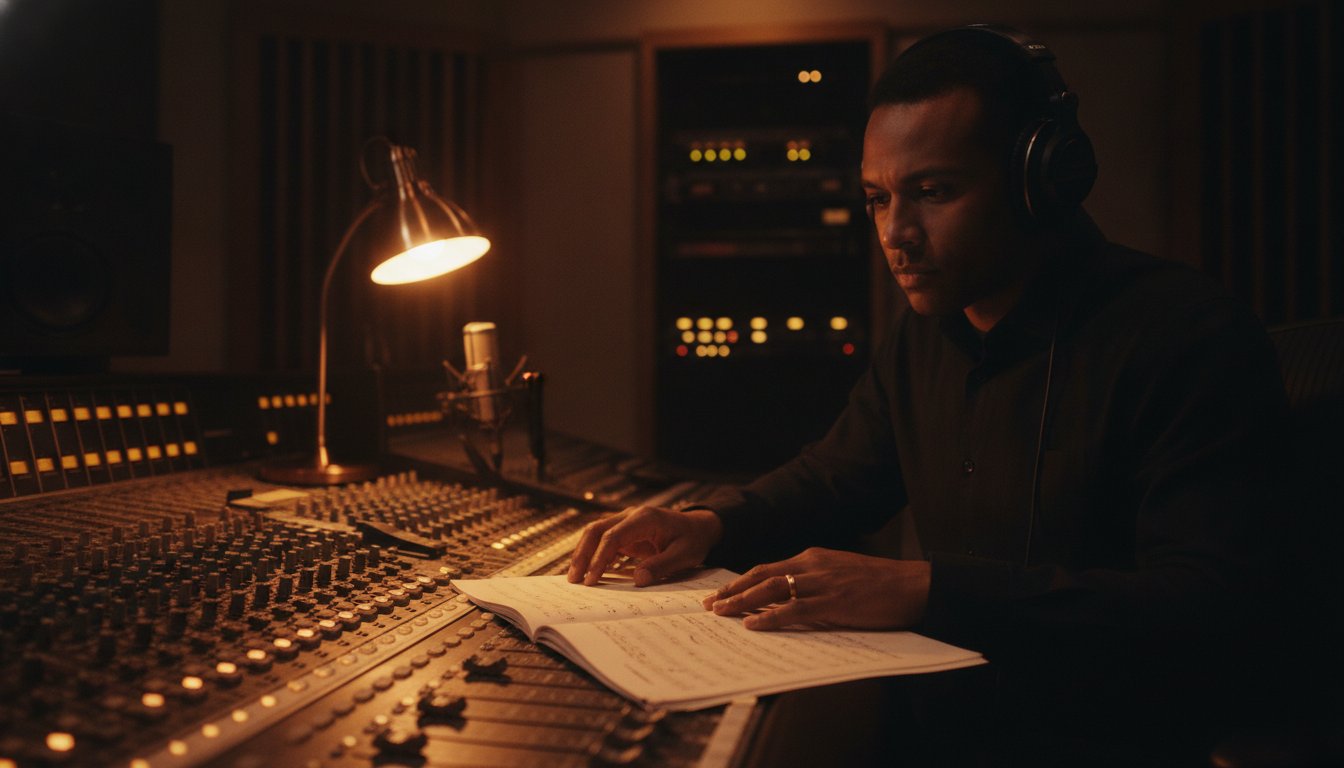
The planning begins with the script marking process. We identify specific musical beats and emotional anchor points where the score should rise to meet the text. This isn't about constant noise. It's about strategic impact. You must decide on the intensity of sound design for each chapter. Does a scene require the heavy, percussive tension of a thriller, or the light, airy lift of a breakthrough moment? At NARRA, we help authors navigate this creative direction, ensuring the final composition reflects the soul of the work. This phase transforms your text into a production-ready score, pinpointing exactly where the music needs to breathe.
Voice and Score Integration
Selecting the right voice is critical. Cinematic audio requires high-end narration that can hold its own against a professional score. In 2026, professional non-union narrators typically charge between $300 to $600 per finished hour, while SAG-AFTRA minimums for platforms like ACX start at $250. These rates reflect the level of skill needed for elite production. The narrator must record with the score in mind, adjusting their pacing to leave room for musical swells. This is often followed by the mixing process, where an audio engineer ensures the voice remains the primary focus. Final mastering then prepares the file for all major distribution platforms, meeting the strict technical requirements of 2026 immersive audio standards.
Budgeting for this level of quality is an investment in your brand's legacy. Total production costs for a professional studio environment often range from $2,500 to $10,000 or more, depending on the complexity of the score. If you are ready to transform your book into a premium audio experience, you can start your cinematic production journey here. The result is a polished, professional reality that stands far above the standard, monotonous recordings that saturate the market.
From Manuscript to Masterpiece: The NARRA Production Experience
The journey from a finished manuscript to a high-end audio experience requires a partner who understands the weight of your words. At NARRA, we don't just record audio; we craft legacies. Our production model is built on the belief that human-led creativity is the only way to avoid the "uncanny valley" of automated voices. We specialize in cinematic scoring for audiobooks, providing an end-to-end service that manages every technical and creative detail. For busy authors and corporate leaders, this means your project moves from the page to the global stage without you needing to manage a complex web of freelancers. We act as your Master Producer, ensuring the final product is the most realized version of your original intent.
Boutique Service in Major Media Hubs
Quality starts with the environment. We operate boutique studio services in major creative hubs, including New York City, Los Angeles, and London. This presence gives our authors direct access to an elite pool of narrators and composers who understand the nuances of high-stakes media. While DIY platforms offer convenience, they cannot replicate the professional studio standards or the collaborative energy of a dedicated production team. By working within these hubs, we ensure that your cinematic scoring for audiobooks is handled by experts who are currently shaping the sound of modern film and television. It is a local-yet-global approach that prioritizes precision and artistic reverence.
Publishing and Beyond
The final hurdle for many authors is the complex world of distribution. Technical requirements for immersive audio are constantly evolving. In 2026, major platforms like Audible and Spotify have strict specifications for high-fidelity and spatial audio files. We handle the entire distribution management process, ensuring your cinematic files are perfectly formatted for every major outlet. This includes managing the metadata and technical handshakes required for a seamless launch. Our goal is to move your work from a private creative process to a public, immersive reality that captivates listeners and elevates your brand.
Your story deserves more than a standard reading. It deserves a soundscape that mirrors its depth and ambition. If you are ready to transform your book into a premium media asset that earns better reviews and higher engagement, the next step is clear. Start your cinematic journey with NARRA today and experience the difference that professional mastery makes.
Claim Your Place in the Immersive Audio Era
Your manuscript is more than just text. It's a world waiting to be realized. We've explored how the shift from dry narration to immersive soundscapes defines the new gold standard for elite authors. By choosing original music over generic loops, you protect your brand's unique identity and ensure your work resonates in a crowded market. This is the undeniable power of cinematic scoring for audiobooks. It transforms a solitary reading into a shared, visceral experience that lingers long after the final chapter ends.
Transformation requires precision and a partner who understands the high stakes of professional media. NARRA provides the expert guidance needed to navigate this complex production landscape. We offer bespoke original music composition and professional production in the world's most influential hubs, including New York, Los Angeles, and London. From the initial script marking to end-to-end publishing and distribution support, we handle the technical weight so you can focus on your creative vision. It's time to move beyond the standard and embrace the extraordinary.
Elevate your story with NARRA's cinematic production services. Your legacy is ready to be heard in high-definition.
Frequently Asked Questions
What is cinematic scoring for audiobooks?
It is a bespoke narrative layer of original music and sound design integrated with professional narration. It moves beyond simple background loops to create a film-like, immersive experience. The score is composed to react to the emotional arc of your manuscript, using leitmotifs and atmospheric textures to deepen the listener's connection to your story and brand.
Does music in an audiobook distract the listener?
Not when it is executed with professional precision. Strategic soundscapes are mixed to complement the voice, not compete with it. We use dynamic mixing to ensure the narration remains the primary focus while the music provides essential emotional subtext. Poorly placed stock music can be distracting, but a custom score breathes with the narrator's natural pace and tone.
Is original music better than stock music for my book?
Yes, because original music provides a unique sonic identity and eliminates copyright risks. Stock libraries are often generic and overused, which can dilute your brand's premium feel. Bespoke cinematic scoring for audiobooks ensures that every melody is tailored to your specific narrative, creating a signature sound that listeners associate only with your work and legacy.
How much does cinematic audiobook production cost?
Costs vary based on the length of the manuscript and the complexity of the original score. Factors include the narrator's professional experience, the composer's time, and the intensive mixing required for immersive audio. While it represents a higher investment than standard narration, it produces a premium media asset designed for higher engagement, better reviews, and long-term brand authority.
Can I use cinematic scoring for a non-fiction or business book?
Absolutely. In non-fiction, we use music to enhance authority and punctuate key lessons. Instead of driving drama, the score provides structural transitions between chapters and subtle atmospheric beds that aid information retention. This approach is highly effective for thought leaders who want to elevate their online courses, masterclasses, or business memoirs into a high-end, professional experience.
How long does it take to produce a cinematically scored audiobook?
The timeline depends on the project's scale, but it is a methodical and reassuring process. It involves script analysis, original composition, professional narration, and a detailed mixing phase. Because we manage the project end-to-end, we ensure the process remains efficient. We break down these complex production stages into manageable steps to respect your publishing timeline and maintain high standards.
Will my cinematically scored book be accepted by Audible and Spotify?
Yes, we ensure every file meets the strict technical specifications of 2026 distribution platforms. Our team manages the end-to-end publishing and distribution process, navigating the requirements for high-fidelity and spatial audio. You won't have to worry about technical rejection or licensing issues, as we handle the metadata and formatting required for a seamless global launch on all major platforms.
Do I need to provide the music, or does NARRA compose it?
NARRA handles the entire composition process for you. We specialize in original music and cinematic scoring for audiobooks, so you don't need to source external tracks or worry about complex licensing. Our composers work closely with you during the planning phase to define a sonic vision that perfectly mirrors your manuscript's intent and emotional depth.
Frequently Asked Questions
It is a bespoke narrative layer of original music and sound design integrated with professional narration. It moves beyond simple background loops to create a film-like, immersive experience. The score is composed to react to the emotional arc of your manuscript, using leitmotifs and atmospheric textures to deepen the listener's connection to your story and brand.
Not when it is executed with professional precision. Strategic soundscapes are mixed to complement the voice, not compete with it. We use dynamic mixing to ensure the narration remains the primary focus while the music provides essential emotional subtext. Poorly placed stock music can be distracting, but a custom score breathes with the narrator's natural pace and tone.
Yes, because original music provides a unique sonic identity and eliminates copyright risks. Stock libraries are often generic and overused, which can dilute your brand's premium feel. Bespoke cinematic scoring for audiobooks ensures that every melody is tailored to your specific narrative, creating a signature sound that listeners associate only with your work and legacy.
Costs vary based on the length of the manuscript and the complexity of the original score. Factors include the narrator's professional experience, the composer's time, and the intensive mixing required for immersive audio. While it represents a higher investment than standard narration, it produces a premium media asset designed for higher engagement, better reviews, and long-term brand authority.
Absolutely. In non-fiction, we use music to enhance authority and punctuate key lessons. Instead of driving drama, the score provides structural transitions between chapters and subtle atmospheric beds that aid information retention. This approach is highly effective for thought leaders who want to elevate their online courses, masterclasses, or business memoirs into a high-end, professional experience.
The timeline depends on the project's scale, but it is a methodical and reassuring process. It involves script analysis, original composition, professional narration, and a detailed mixing phase. Because we manage the project end-to-end, we ensure the process remains efficient. We break down these complex production stages into manageable steps to respect your publishing timeline and maintain high standards.
Yes, we ensure every file meets the strict technical specifications of 2026 distribution platforms. Our team manages the end-to-end publishing and distribution process, navigating the requirements for high-fidelity and spatial audio. You won't have to worry about technical rejection or licensing issues, as we handle the metadata and formatting required for a seamless global launch on all major platforms.
NARRA handles the entire composition process for you. We specialize in original music and cinematic scoring for audiobooks, so you don't need to source external tracks or worry about complex licensing. Our composers work closely with you during the planning phase to define a sonic vision that perfectly mirrors your manuscript's intent and emotional depth.