How to Turn a Book Into an Audiobook: The Professional 2026 Checklist
A professional audiobook is not a recording of a book. It is a cinematic translation of a vision. While the global market is projected to reach 11 billion dollars in 2026, many authors still struggle to bridge the gap between a simple narration and a truly immersive listening experience. You likely feel the weight of this transition. You've heard the flat, uninspired reads that clutter the 750,000 titles currently available; you refuse to let your manuscript become another statistic. Mastering the professional audiobook production process requires more than just meeting technical ACX specs or hitting specific LUFS targets. It demands a sophisticated partnership between your written word and high-end audio engineering.
You want a finished product that enhances your brand legacy rather than just checking a distribution box. This checklist provides the exact roadmap you need to move from a silent manuscript to a grand, cinematic reality. We'll explore how to select a narrator who acts as a guardian of your voice, the technical precision required for elite mastering, and the transformative power of original cinematic scoring. You'll gain the confidence to lead a production that doesn't just tell a story. It creates an entirely new world for your listeners.
Key Takeaways
- Learn how to develop a comprehensive Audiobook Production Bible to ensure your script translates perfectly from the eye to the ear.
- Understand why human-led artistry is essential for emotional resonance and how to source elite narration talent in global creative hubs.
- Master the end-to-end professional audiobook production process to transform a standard manuscript into a high-end cinematic experience.
- Discover the role of original music composition and cinematic scoring in building a lasting brand legacy for your work.
- Navigate the complex 2026 distribution landscape to maximize your ROI across platforms like Spotify, ACX, and beyond.
Step 1: Pre-Production & Script Preparation for the Ear
Writing for the eye is a private conversation. Writing for the ear is a professional performance. The Audiobook production journey begins by recognizing that your manuscript is now a script. A reader can skim a long sentence; a listener cannot. Every syllable must flow with intent. This initial phase of the professional audiobook production process focuses on clarity and cadence. Perform a rigorous read-aloud audit. If you stumble over a sentence, your narrator will too. Catch the tongue-twisters now. Identify "Cinematic Moments" where the narrative breathes. These are the spaces where original music or sound design will elevate the emotional stakes from a simple reading to a full-scale production.
The Audiobook Production Bible
Your Bible is the blueprint for the entire project. It ensures consistency across ten or twenty hours of audio. Define character archetypes with precision. Is the protagonist weary or optimistic? Does the antagonist have a subtle lilt? Don't leave these choices to chance during the recording session. Include a phonetic guide for technical jargon or foreign names. This prevents costly "pick-up" sessions later. Most importantly, map your emotional arc. Mark the chapters that require cinematic scoring to underscore a revelation or a climax. This turns a standard read into an immersive experience. Your narrator needs to know the destination before they speak the first word.
Optimizing Your Manuscript
A manuscript often contains visual anchors that fail in audio. Phrases like "see the chart below" or "refer to the image on page 42" become dead ends for a listener. Scrub these references or rewrite them as descriptive passages. Convert footnotes into fluid asides or move them to an appendix. Refining the text is a critical stage in the professional audiobook production process that authors often overlook. You must also decide who carries the voice. While some authors choose to narrate, professional narrators bring a level of stamina and character range that is difficult to replicate. For busy creators, time saving narration options allow you to maintain your brand legacy without spending forty hours in a recording booth. The goal is a seamless transition from the silent page to the resonant, cinematic air.
Step 2: Casting & Narration Phase
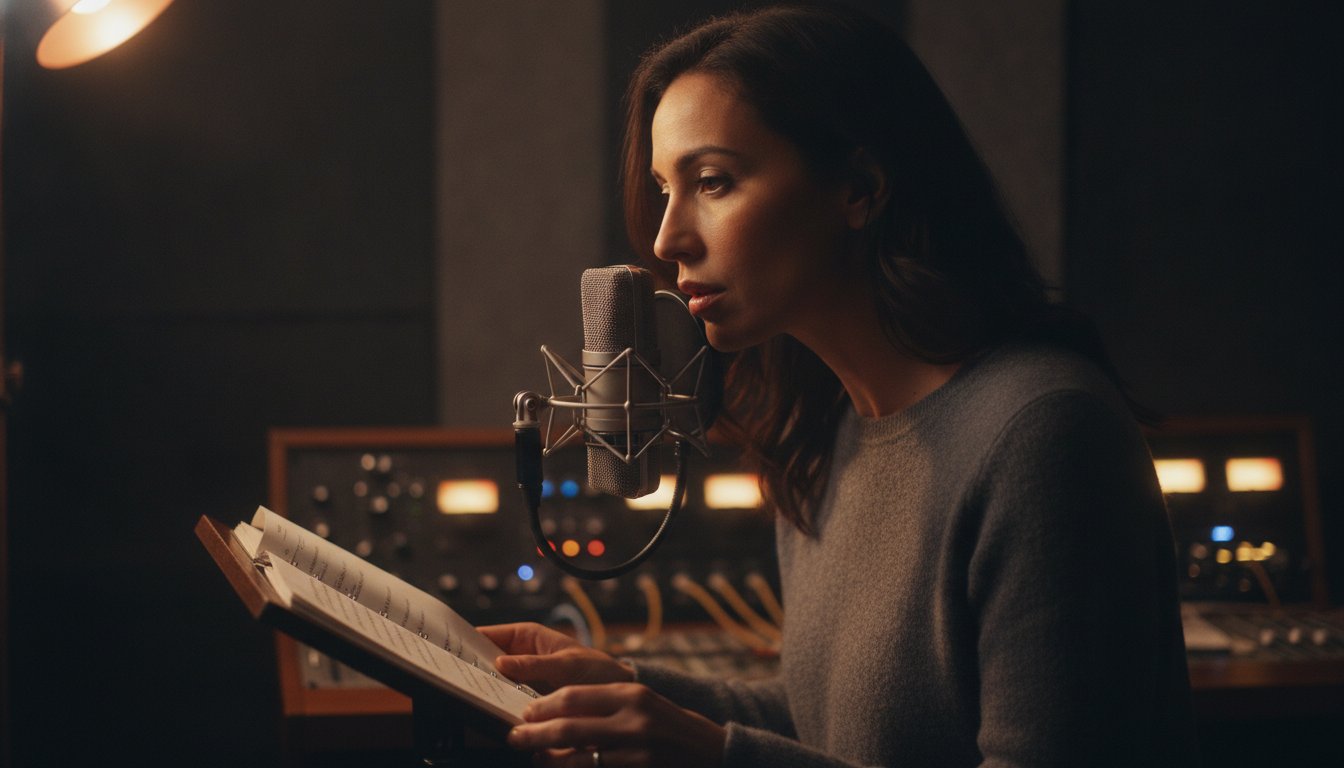
The voice is the bridge. It connects your private intent to the listener’s public experience. While AI synthesis offers efficiency, it lacks the visceral, human-led artistry required to build a lasting legacy. A machine can mimic a sound. Only a human can inhabit a story. In 2026, the professional audiobook production process prioritizes emotional resonance over mechanical output. You aren't just looking for a reader. You're casting a performer who understands the subtext of every paragraph.
Auditioning talent in major media hubs like Los Angeles, New York, and London provides access to narrators who treat their craft with reverence. These are artists who understand how to pace a narrative for maximum impact. They don't just speak; they perform. According to Penguin Random House's Audiobook Process, the collaboration between the producer, director, and narrator is what transforms a script into a masterpiece. This "Director" factor is the secret of elite authors. Having a production lead ensures that every inflection aligns with your original vision. If you're a busy author, consider time saving narration options that allow you to guide the creative direction without the exhaustion of a marathon recording session.
Finding the Perfect Voice
Matching a narrator’s timbre to your book’s "soul" requires a discerning ear. A memoir demands vulnerability. A business text requires authoritative confidence. When evaluating auditions, look beyond basic clarity. Listen for the nuance in their breath. Observe their consistency across different emotional beats. An elite narrator maintains the same energy in hour twenty as they did in hour one. This level of acting ability is what separates a standard read from a cinematic event.
The Recording Environment
Sound is physical. High-end results require the controlled acoustics found in professional studios in hubs like Seattle or San Francisco. The room itself is an instrument. While remote recording has become sophisticated, maintaining quality across distances requires rigorous engineering standards. A "Masterful" recording rhythm is essential. We schedule sessions to prevent vocal fatigue, ensuring the performance remains crisp and vibrant. This methodical approach protects the integrity of the voice. It guarantees that the final audio feels polished and professional from the first word to the last.
Step 3: Cinematic Post-Production & Scoring
Most creators view post-production as a technical cleanup. A professional audiobook production process treats it as the final, transformative draft of your story. Standard editing removes mistakes. Cinematic production adds the soul. This stage is where your manuscript evolves from a linear narrative into a three-dimensional world. You aren't just delivering information. You're crafting an atmosphere that lingers long after the listener hits pause.
Original music composition is the cornerstone of this evolution. It builds an immersive brand. It acts as a psychological cue, telling the listener when to lean in or when to reflect. Sound design punctuates key insights, using subtle textures to highlight emotional peaks. This is the differentiator. While many guides focus strictly on technical revisions, we prioritize the artistic layer that transforms a "read-only" format into a vivid media event. The goal is total immersion.
The Art of Cinematic Scoring
Music is the emotional shorthand of your narrative. We use strategic placement to guide the listener’s journey. Intros and outros establish the project’s sonic identity, while transitional motifs maintain momentum between chapters. This is particularly powerful in memoirs. Scoring acts as a heartbeat, underscoring the author's most vulnerable moments without overshadowing the performance. It creates a sense of reverence for the written word. This artistic partnership ensures your legacy is delivered with the weight it deserves.
Professional Audio Engineering
Technical precision provides the foundation for artistry. We perform a surgical clean of every track. This involves removing mouth clicks, intrusive breaths, and microscopic background noise that distracts the ear. The goal is a "black" background where the voice sits front and center. Balancing levels is a delicate craft. The score must never compete with the narration; it should cradle it. This requires a sophisticated blend of audio engineering and creative intuition. For those seeking a deeper understanding of these techniques, our guide on cinematic audiobook production explores how music fundamentally changes the story. Every decibel is tuned to ensure a seamless finish. It's the final step in a professional audiobook production process designed to honor your vision.
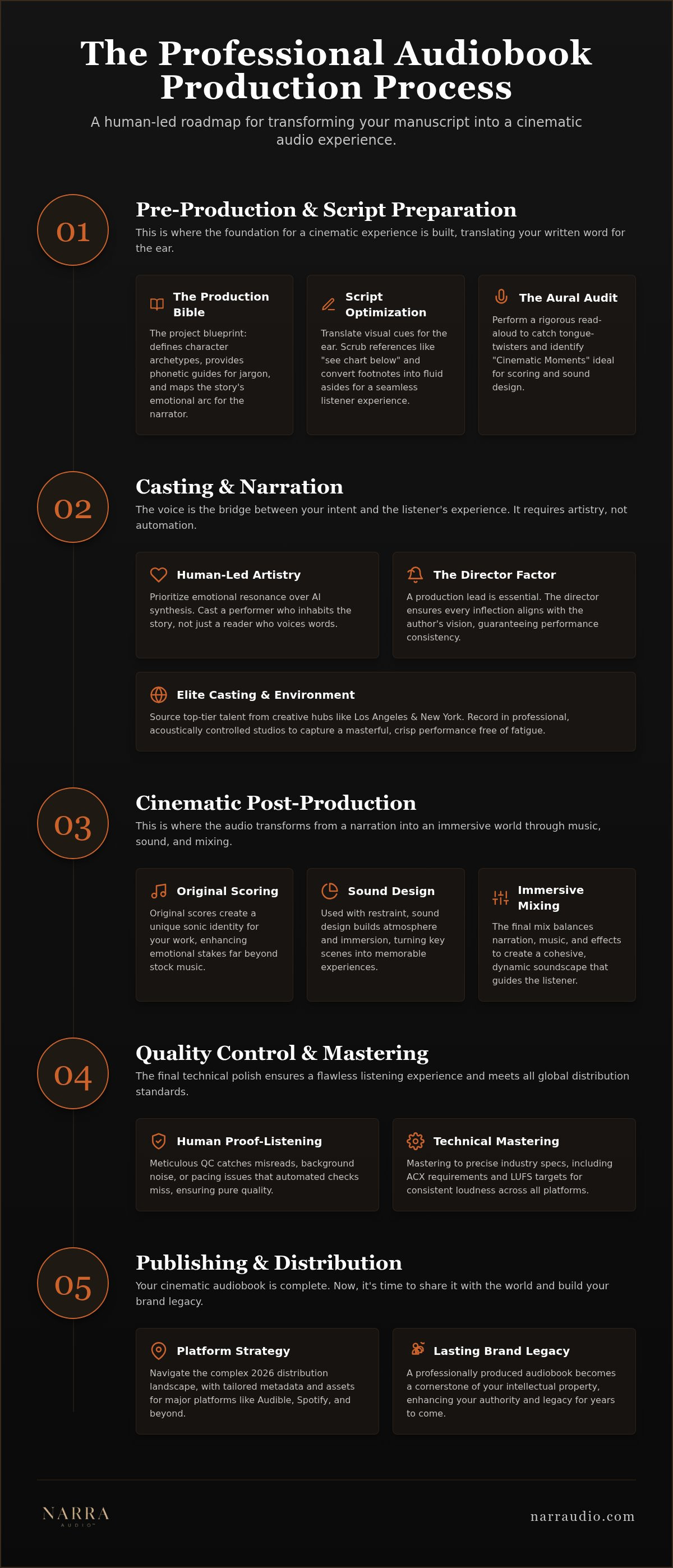
Step 4: Quality Control & Technical Mastering
Precision is the silent guardian of your brand’s legacy. While the creative phases of the professional audiobook production process define the soul of the work, technical mastering ensures it survives the transition to the public ear. This isn't a cursory check for mispronunciations. It is a multi-pass "Golden Ear" audit designed to identify microscopic flaws that a casual listener might feel but never name. If the previous steps were about building a world, this step is about hardening it against technical failure.
Every file must undergo a rigorous scrutiny before it reaches a distribution portal. We analyze the performance for emotional consistency and technical clarity. We ensure that the transition from a quiet, reflective chapter to a high-energy climax feels intentional rather than accidental. This meticulous attention to detail is what separates a boutique production from a mass-market recording. To guarantee your project meets these elite standards, you can partner with us for end-to-end cinematic audiobook production.
Rigorous Quality Control
We simulate the listener’s journey across a spectrum of environments. This includes testing the audio on high-fidelity studio monitors, standard car speakers, and common mobile earbuds. Our "Final Listen" protocol ensures the cinematic score integrated in Step 3 cradles the narration without ever competing for the listener's attention. We look for:
- Pacing inconsistencies that disrupt the narrative flow.
- Misreads or omitted words that alter the author's intent.
- Unnatural gaps or awkward transitions between musical motifs.
Technical Mastering Specs
Mastering is where human-led artistry meets high-stakes engineering. Compliance is non-negotiable for global platforms such as Spotify, ACX, and Findaway Voices. We hit the precise RMS range requirements of -23dB to -18dB to ensure a consistent volume level across the entire book. Noise floor management is equally critical; we maintain a strict -60dB standard to provide a "black" background where every word sits front and center. We also manage peak levels to prevent digital clipping, ensuring the audio remains crisp and vibrant even at high volumes. Finally, we prepare high-resolution files for long-term archiving, ensuring your work remains a permanent, polished part of your professional legacy.
The final file preparation involves more than just exporting audio. We curate the metadata, ensure chapter naming aligns with the table of contents, and verify that the cover art meets the specific pixel and resolution requirements of every major platform. This organized, methodical approach ensures a seamless transition to the final stage of the professional audiobook production process: distribution and ROI.
Step 5: Publishing & Distribution Strategy
Production is the forge; distribution is the theater. The final act of the professional audiobook production process involves placing your cinematic work where it can be discovered, consumed, and revered. In 2026, the landscape has shifted. With the audiobook market projected to reach 11 billion dollars this year, your choice of platform is a high-stakes decision that impacts both your brand legacy and your bottom line. You aren't just uploading a file. You're launching a digital asset that represents years of creative labor.
Navigating audiobook distribution management requires a strategic understanding of royalty models and platform reach. As of May 2026, Audible’s ACX platform has transitioned to a new model offering 50% for exclusive distribution and 30% for non-exclusive paths. Meanwhile, platforms like Spotify and Voices by INaudio offer competitive rates of 50% and 80% respectively. Balancing these options requires a "Master Producer" mindset. You must decide if the reach of a single giant outweighs the freedom of a wide release. Leveraging professional publishing services in creative hubs like London or Orange County ensures your global launch is managed with the precision your work demands.
Selecting Your Distribution Platforms
The "Exclusive" path with Audible offers simplicity and potential algorithmic favor, but it ties your hands. Choosing a "Wide" approach through Findaway Voices or Spotify’s direct portal allows you to meet your audience wherever they listen. Direct-to-consumer sales are also gaining momentum for elite authors. This path allows you to maintain total control of your author brand and capture higher margins. For a deep dive into managing these complex choices, consult our guide on professional audiobook publishing services. We act as your guardian, ensuring your intellectual property is positioned for maximum ROI without sacrificing your artistic intent.
Launching Your Audio Legacy
A successful launch is a coordinated symphony. Sync your audiobook release with your print and eBook debuts to create a unified brand moment. This prevents your audience from fragmenting and maximizes the impact of your marketing spend. Create high-end audio snippets and "behind-the-scenes" clips that highlight the human-led artistry of your production. These assets are essential for social media and podcast promotion. They remind your audience that they aren't just buying a book; they're investing in a cinematic experience. Professional project management is the thread that ties these elements together. It ensures that from the first script note to the final royalty check, your vision remains uncompromised and your legacy remains secure.
Your Voice, Realized: The Future of Your Story
Moving from the quiet world of writing to the grand, immersive landscape of professional media is a profound transformation. You've seen how the professional audiobook production process demands more than just a microphone. It requires a sophisticated blend of human-led artistry and technical precision. By prioritizing a rigorous production bible and selecting narrators who act as guardians of your voice, you ensure your manuscript becomes a cinematic event rather than a mere recording. The integration of original music and multi-pass quality audits guarantees your project meets the elite standards of the 2026 global market.
Your legacy deserves a production that matches its ambition. At NARRA, we provide a boutique studio presence in major media hubs like Los Angeles and London to bridge the gap between your private creative process and the public's listening experience. We specialize in cinematic scoring and original music that underscores the emotional heartbeat of your work. Don't settle for mechanical alternatives that strip the soul from your story. Partner with NARRA for your cinematic audiobook production and transform your vision into a resonant reality. Your story is ready to be heard.
Frequently Asked Questions
How long does the professional audiobook production process take?
A typical professional audiobook production process spans six to twelve weeks from script preparation to final distribution. This timeline accounts for the meticulous layers of cinematic scoring and multi-pass quality control required for high-end results. While a standard read might be rushed, a boutique production requires time for the narrator to inhabit the text and for engineers to craft an immersive sonic environment. Precision takes time, but it protects your brand legacy.
Can I record my own audiobook or should I hire a professional?
You can record your own work, but hiring a professional narrator is often the superior choice for high-stakes projects. Professional talent brings the acting range and vocal stamina required for a ten-hour performance. If your brand relies on your personal voice, we offer time saving narration options that allow you to contribute key sections while a professional handles the heavy lifting. This partnership ensures the final audio remains polished and engaging.
What is the difference between standard and cinematic audiobook production?
Standard production is a "read-only" format focused on clear narration and basic technical compliance. Cinematic production transforms your manuscript into a three-dimensional media event. It utilizes original music composition and strategic sound design to punctuate emotional peaks and key insights. This approach elevates the listener's experience, turning a simple book into an immersive brand asset that resonates far more deeply than a solo voice track ever could.
How much does it cost to turn a book into an audiobook in 2026?
Costs in 2026 vary based on the complexity of the production and the caliber of the talent involved. High-end cinematic projects typically involve separate budgets for professional narration, original music scoring, and rigorous audio engineering. While entry-level DIY options exist, elite authors invest in a comprehensive professional audiobook production process to ensure their work stands out among the 750,000 active titles currently available on major global platforms.
Do I need a separate narrator for every character in my fiction book?
You don't need a separate narrator for every character. A single professional narrator possesses the acting ability to distinguish multiple character archetypes through subtle shifts in tone, pacing, and timbre. While multi-cast productions are an option for specific dramatic effects, a skilled solo performer often provides a more cohesive and intimate listening experience. This approach maintains the narrative flow while still bringing the vibrant soul of your characters to life.
Is AI narration a viable alternative for high-end authors?
AI narration is not a viable alternative for authors who value emotional resonance and artistic legacy. While automated voices have become more prevalent for low-cost backlists, they lack the visceral connection and nuanced performance that only human-led artistry can provide. High-end production focuses on the "Director" factor and the subtle inflections of a human voice. We reject AI synthesis in favor of protecting the unique creative spirit of the written word.
What technical specifications do I need for Audible and Spotify distribution?
Distribution on platforms like Audible and Spotify requires strict adherence to technical mastering specs. Your files must maintain an RMS range between -23dB and -18dB with peak levels not exceeding -3dB. The noise floor must be kept at a rigorous -60dB standard to ensure a clean, professional sound. Mastering also involves preparing high-resolution files and ensuring metadata aligns perfectly with your chapter structure to prevent any friction during the upload process.
How do I find a professional recording studio in Los Angeles or New York?
Finding a professional studio in elite creative hubs requires looking for boutique spaces that specialize in cinematic media rather than just music. Los Angeles and New York are centers of excellence for voice production and high-stakes engineering. We maintain a presence in these major hubs to ensure authors have access to the best talent and acoustic environments. Selecting a studio with a proven record in cinematic scoring is essential for a high-end launch.
Frequently Asked Questions
A typical professional audiobook production process spans six to twelve weeks from script preparation to final distribution. This timeline accounts for the meticulous layers of cinematic scoring and multi-pass quality control required for high-end results. While a standard read might be rushed, a boutique production requires time for the narrator to inhabit the text and for engineers to craft an immersive sonic environment. Precision takes time, but it protects your brand legacy.
You can record your own work, but hiring a professional narrator is often the superior choice for high-stakes projects. Professional talent brings the acting range and vocal stamina required for a ten-hour performance. If your brand relies on your personal voice, we offer time saving narration options that allow you to contribute key sections while a professional handles the heavy lifting. This partnership ensures the final audio remains polished and engaging.
Standard production is a "read-only" format focused on clear narration and basic technical compliance. Cinematic production transforms your manuscript into a three-dimensional media event. It utilizes original music composition and strategic sound design to punctuate emotional peaks and key insights. This approach elevates the listener's experience, turning a simple book into an immersive brand asset that resonates far more deeply than a solo voice track ever could.
Costs in 2026 vary based on the complexity of the production and the caliber of the talent involved. High-end cinematic projects typically involve separate budgets for professional narration, original music scoring, and rigorous audio engineering. While entry-level DIY options exist, elite authors invest in a comprehensive professional audiobook production process to ensure their work stands out among the 750,000 active titles currently available on major global platforms.
You don't need a separate narrator for every character. A single professional narrator possesses the acting ability to distinguish multiple character archetypes through subtle shifts in tone, pacing, and timbre. While multi-cast productions are an option for specific dramatic effects, a skilled solo performer often provides a more cohesive and intimate listening experience. This approach maintains the narrative flow while still bringing the vibrant soul of your characters to life.
AI narration is not a viable alternative for authors who value emotional resonance and artistic legacy. While automated voices have become more prevalent for low-cost backlists, they lack the visceral connection and nuanced performance that only human-led artistry can provide. High-end production focuses on the "Director" factor and the subtle inflections of a human voice. We reject AI synthesis in favor of protecting the unique creative spirit of the written word.
Distribution on platforms like Audible and Spotify requires strict adherence to technical mastering specs. Your files must maintain an RMS range between -23dB and -18dB with peak levels not exceeding -3dB. The noise floor must be kept at a rigorous -60dB standard to ensure a clean, professional sound. Mastering also involves preparing high-resolution files and ensuring metadata aligns perfectly with your chapter structure to prevent any friction during the upload process.
Finding a professional studio in elite creative hubs requires looking for boutique spaces that specialize in cinematic media rather than just music. Los Angeles and New York are centers of excellence for voice production and high-stakes engineering. We maintain a presence in these major hubs to ensure authors have access to the best talent and acoustic environments. Selecting a studio with a proven record in cinematic scoring is essential for a high-end launch.