Narrative Audio Production for Fiction: The Cinematic Evolution of Storytelling
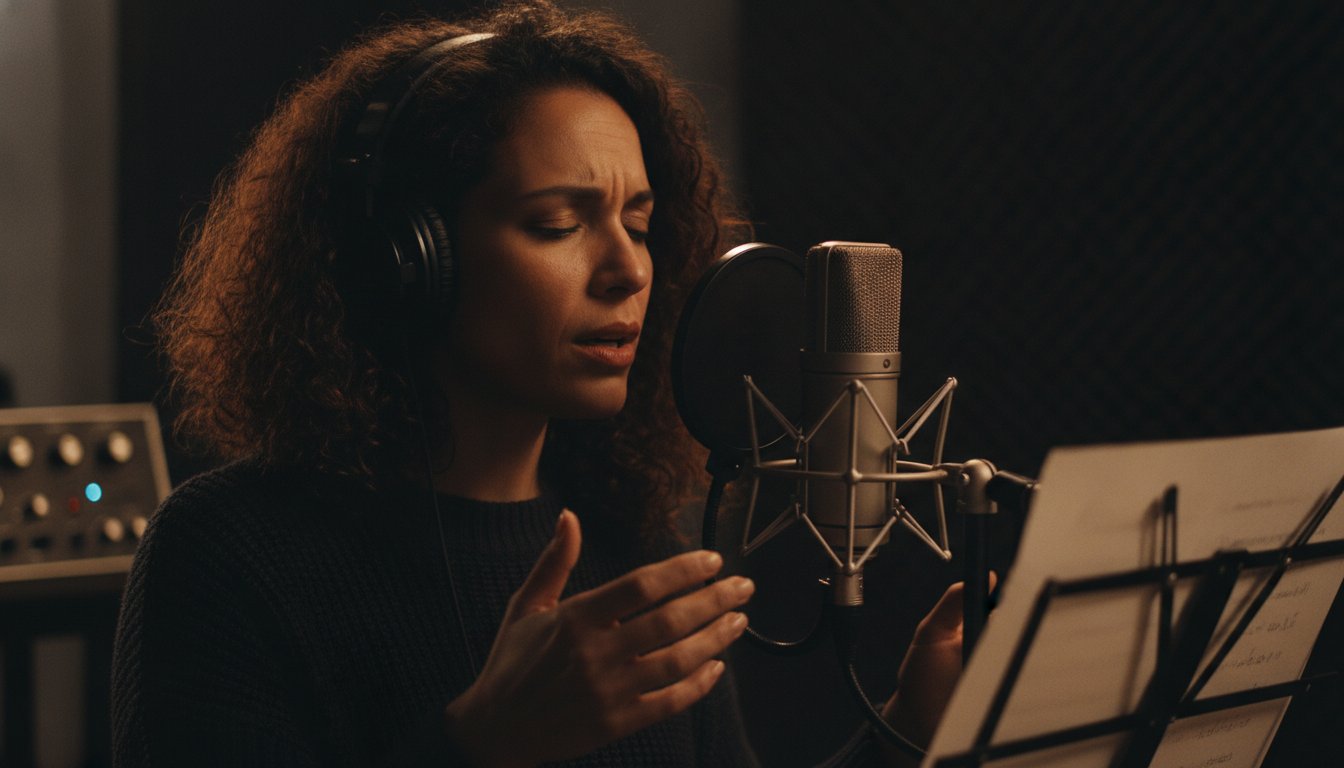
Fiction is no longer a silent experience confined to the page. With the global audiobook market projected to reach 13.9 billion dollars in 2026, your story is competing for attention in a landscape defined by premium media. Achieving professional narrative audio production for fiction requires more than a microphone and a quiet room. It demands a total transformation from simple reading to a visceral, cinematic performance.
You've likely felt the weight of this evolution. It's a common anxiety to fear that a meticulously crafted manuscript might fall flat because of a robotic narrator or thin sound quality. The technical complexity of world-building through audio often feels like a barrier between your private creative process and the public's ear. This article shows you how to bridge that gap. You'll discover how to elevate your brand by turning prose into an immersive soundscape that rivals film and television. We will explore the nuances of cinematic scoring, the search for elite-level voices, and the logistics of seamless distribution to platforms like Spotify and Audible.
Key Takeaways
- Elevate your work. Move beyond solitary readings to create visceral media events that command total listener attention.
- Transform your prose. Learn how narrative audio production for fiction creates performance-ready scripts built for dramatic tension.
- Prioritize performance. Shift from simple narration to professional acting to ensure every emotional beat resonates with cinematic precision.
- Bridge the gap. Identify the sonic cues and original scoring techniques that turn traditional audio into a film-grade experience.
- Streamline your success. Master the end-to-end workflow from recording to global distribution on major platforms like Audible and Spotify.
What is Narrative Audio Production for Fiction?
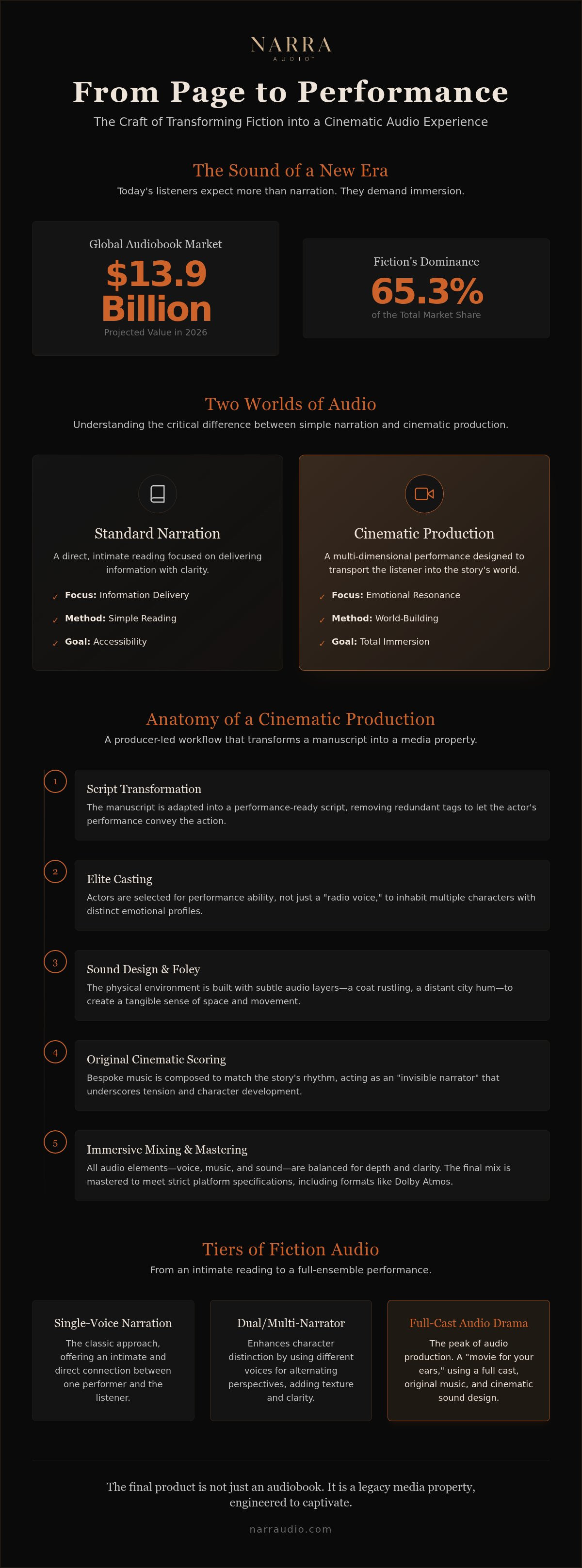
Narrative audio production for fiction is the high-end art of translating written prose into a multi-dimensional sensory experience. It's the difference between a lecture and a performance. While the History of audiobooks began as a simple utility for accessibility, the 2026 landscape has shifted toward theatricality. Today's listeners don't just want to be read to; they want to be transported. With fiction accounting for approximately 65.3% of the 13.9 billion dollar audiobook market this year, creators must meet the expectations of an audience raised on high-production podcasts and streaming series.
This evolution requires a Cinematic Visionary in the production booth. This isn't just a technician who hits record. It's a producer who understands narrative tension, character arcs, and the precise emotional frequency of a scene. They act as a guardian of the author's voice, ensuring the final output is the most realized version of the original intent. They bridge the gap between the quiet world of writing and the grand world of professional media.
The Tiers of Fiction Audio
Understanding your production options helps you position your work effectively. The industry generally operates across three distinct levels:
- Single-voice narration: This remains the classic approach, offering a direct and intimate connection between a single performer and the listener.
- Dual or multi-narrator: These setups enhance character distinction, often using different voices for alternating chapters or perspectives to provide texture.
- Full-cast audio drama: The peak of narrative audio production for fiction, these are essentially movies for your ears. They utilize original music and cinematic scoring to create a fully immersive world.
Why Fiction Demands a Different Approach than Non-Fiction
Non-fiction is often about the efficient delivery of information. Fiction is about subtext. A character saying "I'm fine" in a novel might mean the exact opposite; that nuance must be captured through performance and pacing. In fiction, we aren't just conveying facts. We are building sonic worlds. This requires character-specific voice production that respects the internal logic of your story. While non-fiction listeners value clarity and authority, fiction listeners seek emotional resonance and an escape into a fully realized environment. Every breath and pause in fiction carries the weight of the story's legacy.
The Anatomy of Cinematic Audiobook Production
Narrative audio production for fiction transforms a static manuscript into a dynamic media property. It begins with the script. Unlike a simple reading, a cinematic production requires a performance-ready text. We strip away redundant dialogue tags and descriptive "he saids" that the actor's performance will naturally convey. This creates room for the story to breathe. It moves the project from the quiet, solitary world of writing to the grand, immersive world of professional media.
Casting is your most critical creative pivot. We prioritize acting ability over a traditional "radio voice." A narrator must inhabit multiple characters, maintaining distinct emotional profiles throughout a ten-hour odyssey. This human element prevents a story from sounding flat or mechanical. Precision in casting ensures that the final output is the most realized version of your original intent.
Sound design and foley provide the physical environment. Whether it's the subtle rustle of a coat or the distant hum of a futuristic city, these layers create a sense of space and movement. They turn a void into a world. To see how these elements combine into a professional product, explore our Cinematic Audiobook Production services. We act as a bridge between your creative vision and the listener's ear.
Cinematic Scoring: The Invisible Narrator
Cinematic scoring is the emotional heartbeat of the production. It acts as an invisible narrator, underscoring character development and signaling plot twists before they occur. While stock music often feels like an afterthought, original cinematic scoring is composed to match the specific rhythm of your prose. It builds the narrative tension required to keep listeners tethered to the story. This bespoke approach creates a legacy for your work that stock tracks simply cannot replicate.
Post-Production: Mixing for Immersion
Mixing for immersion is the final, essential step in narrative audio production for fiction. We balance voice, music, and foley to ensure clarity without sacrificing depth. The industry is moving toward spatial audio and Dolby Atmos in fiction, providing a 360-degree experience that rivals high-end cinema. Finally, we ensure every file meets the strict technical compliance standards for 2026 distribution on major platforms like Spotify and Audible. This technical precision guarantees a flawless launch for your brand.
Standard Narration vs. Cinematic Storytelling for Audiobooks
Choosing between standard narration and cinematic storytelling is a choice between a commodity and an asset. Standard narration is built for the industrial speed of the marketplace. It's often a single voice in a quiet room, recorded quickly and edited for basic clarity. While this "industrial" approach works for non-fiction, it often leaves fiction sounding flat or robotic. In contrast, narrative audio production for fiction is a deliberate, high-stakes media event. It requires more time because every emotional beat is scored and every sonic layer is curated to build narrative tension.
The difference in listener retention is stark. In 2026, the global audiobook audience is increasingly younger, with the 18 to 34 demographic leading the charge on platforms like Spotify. These listeners expect a theatrical experience. Cinematic audio keeps people tethered to the story longer because it mimics the immersive pacing of a well-edited film. It transforms your work from a solitary reading into a visceral media property that commands a premium presence in the marketplace.
The ROI of High-End Production
Investing in cinematic audio is an investment in your author brand's legacy. It provides a unique differentiator in a crowded Audible marketplace where thousands of titles are released monthly. High-production audio also yields versatile assets for your marketing strategy. You can extract cinematic clips for social media or use the original score for high-impact book trailers. This isn't just about the finished hour of audio; it's about creating a "media event" that elevates your brand above the noise.
Human Performance vs. AI Automation
The most common objection to high-end production is the rise of AI automation. While AI voice generators offer a cost-effective alternative, they lack the human empathy required for complex fiction. An algorithm cannot understand the subtext of a character's grief or the subtle sarcasm in a line of dialogue. At NARRA, we act as a guardian of the creator's voice. We believe that a Master Producer guiding a professional actor is the only way to capture the nuance of a human-led performance. Our commitment to artistic integrity ensures your story remains deeply personal and emotionally resonant, far removed from mechanical alternatives.
Preparing Your Fiction for Audio: A Producer’s Checklist
Transformation begins with deliberate preparation. Moving from a written manuscript to high-end narrative audio production for fiction requires a shift in perspective. You aren't just publishing a book; you're producing a media event. This process demands a methodical approach to ensure the final audio captures the rhythmic soul of your prose while meeting the technical standards of 2026 listeners. It moves your project from the quiet, solitary world of writing to the grand, immersive world of professional media.
- Step 1: Audit for Audio-First Clarity. Read your manuscript aloud. Identify sentences that are too long for a single breath or words that create unintentional tongue-twisters.
- Step 2: Identify Sonic Cues. Mark moments where sound design can replace description. If a door slams, the sound effect does the work; your text doesn't need to describe the noise.
- Step 3: Create Character Dossiers. Provide your narrators with more than just an accent. Detail their motivations, vocal textures, and emotional triggers to ensure a consistent performance.
- Step 4: Choose a Strategic Production Hub. Position your project in major media centers like LA, NY, or London to access the world's most elite voice talent and engineering expertise.
Script Preparation for Audio Drama
A cinematic script is leaner than a novel. We often remove "he said" or "she said" tags because the actor's unique voice and the spatial positioning in the mix make them redundant. This creates a fluid, high-energy pacing that mirrors a well-edited film. Timing your chapters is equally vital. We aim for optimal listener engagement by ensuring cliffhangers and emotional crescendos land with precision. This structural refinement allows the Cinematic Scoring for Audiobooks: How Music Changes the Story to integrate seamlessly with your narrative arc.
Selecting Your Creative Team
The right team understands the specific architecture of your genre. A Sci-Fi epic requires a different sound palette than a slow-burn Romance. While we utilize recording hubs in creative centers like Seattle or San Diego, the master production is always overseen by a visionary who protects your original intent. For authors managing multiple series, we offer Time Saving Narration Options that maintain premium quality without compromising your release schedule. This partnership ensures your project moves from raw potential to a polished, professional reality. Ready to elevate your story? Start your journey with our Cinematic Audiobook Production services today.
The NARRA Approach: From Script to Global Distribution
NARRA acts as the bridge between your private creative process and the public's immersive listening experience. We don't just provide a studio; we provide a Master Producer who acts as a guardian of your voice. Our end-to-end workflow is designed to be methodical and reassuring, breaking down the massive complexity of narrative audio production for fiction into manageable, time-efficient steps. From the first recording session in our LA or London hubs to the final cinematic scoring, every stage is a crescendo toward a professional media reality.
Mastering is where the technical meets the sensory. We ensure your project meets the highest industry standards, preparing it for the high-stakes world of global media. This isn't just about volume; it's about clarity, depth, and emotional resonance. We handle the technical heavy lifting so you can stay focused on your next manuscript. Our process ensures that the final output is the most realized version of your original intent, polished and ready for a global audience.
Distribution and Market Presence
Navigating the 2026 distribution landscape requires more than just an upload button. With Audible's recent royalty model updates and Spotify's expanding global audience, your market presence depends on flawless execution. We manage the complex metadata requirements and technical specifications for platforms like Apple Books and Spotify. This managed service ensures a professional launch that protects your brand's legacy. Unlike DIY approaches that leave authors overwhelmed, we ensure your project doesn't just exist; it competes with the highest tier of professional media.
Your Story, Elevated
Writing is a solitary act, but storytelling is a shared experience. The transformation from a quiet word on a page to a grand, immersive soundscape is the ultimate elevation of your craft. At NARRA, we offer the boutique, personal support you need to navigate this cinematic evolution. We value the human element of performance over mechanical alternatives, ensuring your story remains uniquely yours. It's time to move beyond the page and claim your place in the future of audio. Start Your Cinematic Audio Journey with NARRA and turn your fiction into the immersive reality it deserves to be.
Step Into the Future of Audio Storytelling
The evolution of the audiobook is definitive. It's no longer just about basic accessibility; it's about creating a visceral, theatrical experience that demands total attention. Professional narrative audio production for fiction turns your solitary manuscript into a global media asset. By prioritizing human nuance over mechanical automation and integrating original cinematic scoring, you ensure your story resonates with the emotional depth it deserves. This shift from simple reading to immersive performance is what keeps 2026 audiences tethered to your world.
NARRA acts as your cinematic visionary throughout this transformation. With elite studios in major hubs like LA, NY, London, and Seattle, we provide the infrastructure and expertise to elevate your brand. We offer end-to-end publishing and distribution support, ensuring your work reaches platforms like Audible and Spotify with a polished, professional market presence. Your voice is a legacy. It's time to let the world hear it in its most realized form. We're ready to help you bridge the gap between the page and the listener's ear.
Elevate your fiction with cinematic production at NARRA.
Frequently Asked Questions
What is the difference between an audiobook and a narrative fiction podcast?
Audiobooks are typically full length works sold through major retailers like Audible. Narrative fiction podcasts are usually episodic and free to the public via RSS feeds. Cinematic audiobooks bridge this gap. They apply the high production values of scripted podcasts, including sound design and original scoring, to the complete structure of a novel. This creates a premium media asset rather than a simple digital file.
How much does cinematic narrative audio production cost for a novel?
The total investment depends on your manuscript's length and the depth of sound design required. Production costs are influenced by the number of narrators, the complexity of the original cinematic scoring, and the hours spent in post production mixing. Professional industry standards often follow a Per Finished Hour model. This ensures that every minute of your story receives the precision and technical oversight it deserves for a cinematic result.
Can I use original music in my fiction audiobook?
Yes, original music is a fundamental pillar of cinematic storytelling. Unlike stock music, bespoke scoring is composed to match the specific emotional frequency of your prose. It acts as an invisible narrator that builds tension and highlights character development. This approach ensures your work has a unique sonic identity. It elevates your story from a standard reading to a visceral media event that resonates with listeners.
How long does the narrative audio production process take for fiction?
A high end production typically spans several weeks to a few months. This methodical timeline covers script adaptation, elite casting, and the detailed layering of foley and music. We prioritize artistic precision over industrial speed. This deliberate pace allows our producers to act as guardians of your voice. It ensures the final output is a polished, professional reality that competes with film and television standards.
Do I need to hire a separate director for my fiction audio project?
No, a comprehensive production partner provides a Master Producer who fulfills the directorial role. They guide the narrator's performance, manage the technical engineering, and ensure the final audio aligns with your creative vision. This central oversight is essential for maintaining narrative tension. It prevents the story from sounding flat and ensures that every emotional beat is captured with professional direction and human empathy.
Is narrative audio production available in cities like Los Angeles or London?
Yes, narrative audio production for fiction is highly accessible in global media hubs. NARRA operates boutique studios in Los Angeles, New York, London, and Seattle. These locations provide direct access to the world's most elite voice talent and engineering expertise. Recording in these centers ensures your project benefits from high stakes production standards. It positions your brand alongside the most realized versions of professional media.
What are the technical requirements for distributing fiction audio to Audible?
Audible requires strict adherence to technical standards for 2026 distribution. Files must meet specific bitrates and RMS power levels while remaining free of extraneous noise. Every chapter must be properly segmented for a seamless listener experience. Our managed distribution services handle these complex specifications. We ensure your project meets all platform requirements, allowing you to focus on the creative legacy of your writing instead of technical hurdles.
Why should I choose human narrators over AI for my fiction book?
Fiction relies on subtext and emotional nuance that AI simply cannot replicate. An algorithm doesn't understand the weight of a character's grief or the subtle irony in a line of dialogue. Human performers bring a palpable sense of reverence to the written word. This creates an authentic connection with your audience. Choosing human led narrative audio production for fiction ensures your story remains deeply personal and emotionally resonant.
Frequently Asked Questions
Audiobooks are typically full length works sold through major retailers like Audible. Narrative fiction podcasts are usually episodic and free to the public via RSS feeds. Cinematic audiobooks bridge this gap. They apply the high production values of scripted podcasts, including sound design and original scoring, to the complete structure of a novel. This creates a premium media asset rather than a simple digital file.
The total investment depends on your manuscript's length and the depth of sound design required. Production costs are influenced by the number of narrators, the complexity of the original cinematic scoring, and the hours spent in post production mixing. Professional industry standards often follow a Per Finished Hour model. This ensures that every minute of your story receives the precision and technical oversight it deserves for a cinematic result.
Yes, original music is a fundamental pillar of cinematic storytelling. Unlike stock music, bespoke scoring is composed to match the specific emotional frequency of your prose. It acts as an invisible narrator that builds tension and highlights character development. This approach ensures your work has a unique sonic identity. It elevates your story from a standard reading to a visceral media event that resonates with listeners.
A high end production typically spans several weeks to a few months. This methodical timeline covers script adaptation, elite casting, and the detailed layering of foley and music. We prioritize artistic precision over industrial speed. This deliberate pace allows our producers to act as guardians of your voice. It ensures the final output is a polished, professional reality that competes with film and television standards.
No, a comprehensive production partner provides a Master Producer who fulfills the directorial role. They guide the narrator's performance, manage the technical engineering, and ensure the final audio aligns with your creative vision. This central oversight is essential for maintaining narrative tension. It prevents the story from sounding flat and ensures that every emotional beat is captured with professional direction and human empathy.
Yes, narrative audio production for fiction is highly accessible in global media hubs. NARRA operates boutique studios in Los Angeles, New York, London, and Seattle. These locations provide direct access to the world's most elite voice talent and engineering expertise. Recording in these centers ensures your project benefits from high stakes production standards. It positions your brand alongside the most realized versions of professional media.
Audible requires strict adherence to technical standards for 2026 distribution. Files must meet specific bitrates and RMS power levels while remaining free of extraneous noise. Every chapter must be properly segmented for a seamless listener experience. Our managed distribution services handle these complex specifications. We ensure your project meets all platform requirements, allowing you to focus on the creative legacy of your writing instead of technical hurdles.
Fiction relies on subtext and emotional nuance that AI simply cannot replicate. An algorithm doesn't understand the weight of a character's grief or the subtle irony in a line of dialogue. Human performers bring a palpable sense of reverence to the written word. This creates an authentic connection with your audience. Choosing human led narrative audio production for fiction ensures your story remains deeply personal and emotionally resonant.